 +91-9810222486
 contact@thebanyanworld.com
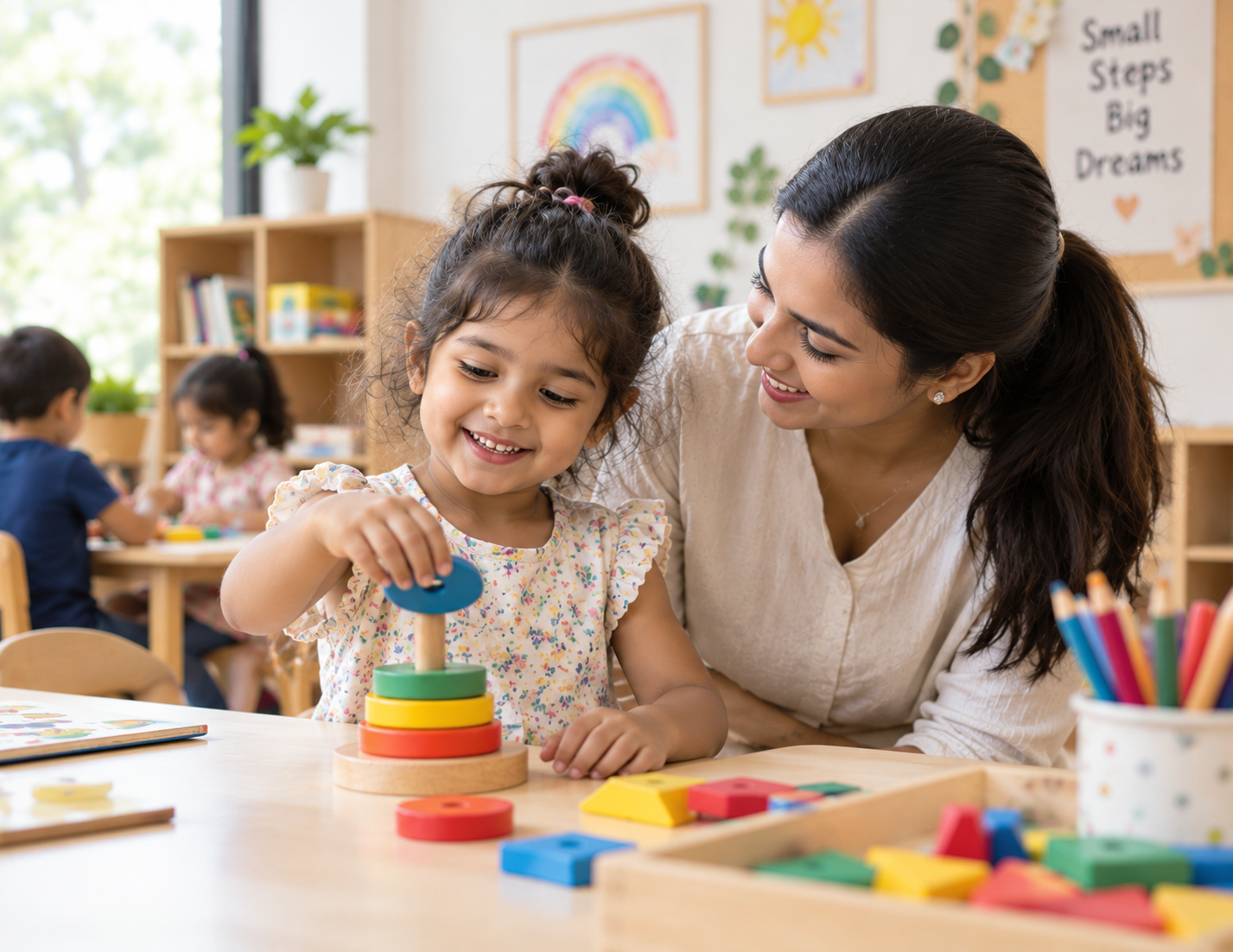
Building Confidence in Early Years: Small Steps, Big Growth
Why Confidence Matters in Early Childhood
Confidence is one of the most important qualities a child can develop in their early years. It influences how children interact with others, approach challenges, and express themselves.
In daycare environments, confidence is not built through big achievements alone. Instead, it grows through small, everyday experiences that help children feel capable, valued, and supported.
From trying a new activity to speaking in front of peers, each step plays a role in shaping a child’s self-belief.
If you are wondering how to build confidence in children, the answer is rarely one big lesson. It is many small moments of encouragement, independence, and trust. At Banyan, we see confidence grow every day through simple routines and caring relationships.
What Does a Confident Child Look Like?
Confidence in young children does not always mean being loud or outgoing. It often looks like:
- Willingness to try something new, even when unsure
- Asking for help when needed
- Making simple choices
- Joining in with other children, in their own way
- Trying again after a mistake
- Taking pride in small achievements
Some children show confidence quietly. Both styles are healthy.
Encouraging Independence in Daily Activities
One of the key ways daycare environments build confidence is by encouraging independence. Children are given opportunities to complete simple tasks on their own, such as organizing their belongings, choosing activities, or cleaning up after playtime.
These small responsibilities help children develop a sense of control and ownership over their actions.
When children realize that they can do things independently, it boosts their confidence and motivates them to take on new challenges.
Simple Independence Tasks by Age
| Age | Tasks to try (with support) |
|---|---|
| Toddlers (1 to 2 years) | Putting toys in a basket, helping wash hands, choosing between two snacks |
| Ages 2 to 3 | Carrying their own bag, helping set out cups, tidying up after play |
| Ages 3 to 4 | Putting on shoes, choosing activities, pouring water with help |
| Ages 4 to 6 | Packing a small bag, organizing belongings, helping younger children |
A steady daycare routine for toddlers also helps, because children feel more capable when they know what comes next.
Celebrating Small Achievements
Confidence grows when children feel recognized and appreciated. In daycare settings, teachers often celebrate small achievements, whether it is completing a task, sharing with a friend, or participating in an activity.
Positive reinforcement encourages children to keep trying and improving. It helps them understand that effort is just as important as success.
Over time, children begin to take pride in their accomplishments, no matter how small they may seem.
Praise That Builds Confidence
How adults praise matters. Try:
- “You worked so hard on that!” instead of “You’re so smart.”
- “You tried again. I love that!” instead of “That’s perfect.”
- “Tell me about your drawing.” instead of “What is it?”
- “You helped your friend. That was kind.” instead of “Good girl” or “Good boy.”
Praising effort and kindness helps children feel confident without feeling pressured to be perfect.
Creating a Safe and Supportive Environment
A supportive environment is essential for building confidence. Children need to feel safe to express themselves without fear of judgment or failure.
Teachers play an important role in creating this environment by offering encouragement, patience, and understanding.
When children know that they are supported, they are more willing to take risks, ask questions, and try new things.
A safe daycare also supports emotional development in preschool: children who feel emotionally secure explore more, speak up more, and recover from setbacks more easily.
Developing Social Confidence
Interacting with peers also helps children build confidence. Group activities such as storytelling, games, and collaborative tasks encourage children to communicate and participate.
Children gradually become more comfortable sharing their thoughts, expressing their ideas, and engaging with others.
These social interactions help them develop communication skills and a sense of belonging. They are also a key part of building social skills in preschool, where children practise taking turns, sharing, and working together.
Learning to Overcome Challenges
Confidence is not just about success—it is also about learning to handle challenges. In daycare environments, children are gently guided through difficulties and encouraged to try again.
Whether it is solving a puzzle or resolving a small conflict, these experiences teach resilience and perseverance.
Children learn that it is okay to make mistakes and that they can improve with effort and practice.
What About Shy or Hesitant Children?
Some children take longer to warm up, and that is completely normal. To help a shy child:
- Avoid labelling them as “shy” in front of others
- Let them watch first, then join in when ready
- Offer small, low-pressure chances to take part, such as helping with one task
- Stay patient and encouraging, without forcing participation
- Pair them with a kind friend for small group activities
Starting daycare or preschool can bring up big feelings. Visiting together first, keeping goodbyes short and warm, and following steady routines will help your child adjust to daycare and grow in confidence.
How Parents Can Raise a Confident Child at Home
To raise a confident child, home and daycare work best together:
- Let them try before you step in
- Offer simple choices, such as “red cup or blue cup?”
- Listen without rushing or dismissing feelings
- Give them small jobs, like feeding a pet or watering a plant
- Celebrate effort, and talk about mistakes as part of learning
- Keep routines steady, so your child feels secure
How Daycare Helps Child Development and Confidence
Here are some benefits of daycare for children that support confidence:
- Trusted relationships with caring educators
- Daily practice in independence, such as handling belongings and choosing activities
- Peer interaction that builds communication and belonging
- Play and creative activities where there is no right or wrong
- Gentle guidance when things get difficult
A daycare with activities such as art, music, storytelling, and play gives children many chances to try, explore, and feel proud of what they can do. This is the heart of a play based preschool.
What to Look for in a Daycare That Builds Confidence
- Educators who encourage and ask questions instead of only giving instructions
- Time for independence, such as tidying up and choosing activities
- A calm, safe, and welcoming environment
- Positive, effort-focused feedback
- Opportunities for group activities and play
- Open communication with parents about your child’s progress
Building confidence in early childhood is a gradual and meaningful process. Through everyday experiences, encouragement, and support, children develop a strong sense of self-belief.
Daycare environments play an important role in nurturing this growth by creating opportunities for independence, exploration, and connection.
In the end, it is these small steps that lead to big growth—helping children become confident individuals ready to explore the world around them.
Related reading
- The Role of Creative Arts in Early Childhood Development
- School Ready vs Emotionally Ready: The Conversation Every Parent Is Having
Frequently Asked Questions
1. How do I build confidence in my child?
Offer chances for independence, praise effort rather than only results, listen to their feelings, and keep routines steady. Confidence grows through many small, positive experiences.
2. At what age do children start building confidence?
Confidence begins in the earliest years. Even toddlers build it when they make simple choices, try tasks themselves, and receive warm encouragement.
3. How does daycare help build confidence in children?
Daycare offers daily practice with independence, social interaction, and encouragement from caring educators. These small experiences help children feel capable and valued.
4. How can I raise a confident child?
Let them try before you step in, give simple choices, celebrate effort, and talk about mistakes as part of learning. Home and daycare routines that work together help the most.
5. How can I help a shy child feel more confident?
Be patient, avoid labelling, let them watch first, and offer small, low-pressure chances to take part. Every child warms up at their own pace.
6. What is the best way to praise a child?
Praise effort, kindness, and persistence rather than only results or intelligence. For example, “You worked so hard on that!” builds more confidence than “You’re so smart.”
7. How does independence build confidence?
When children complete small tasks on their own, such as packing a bag or tidying up, they feel capable and in control, which motivates them to try new things.
8. How do social skills in preschool support confidence?
Group activities teach children to share ideas, take turns, and communicate. Feeling part of a group gives children a sense of belonging and self-belief.
9. How can I help my child adjust to daycare?
Visit the centre together, keep goodbyes short and warm, share your child’s routines with educators, and follow a steady routine at home. Most children settle in within a few weeks.
10. What should I look for in a daycare that builds confidence?
Look for encouraging educators, a safe and welcoming environment, time for independence, play and creative activities, and open communication with parents.
 Call Us
 Email Us