 +91-9810222486
 contact@thebanyanworld.com
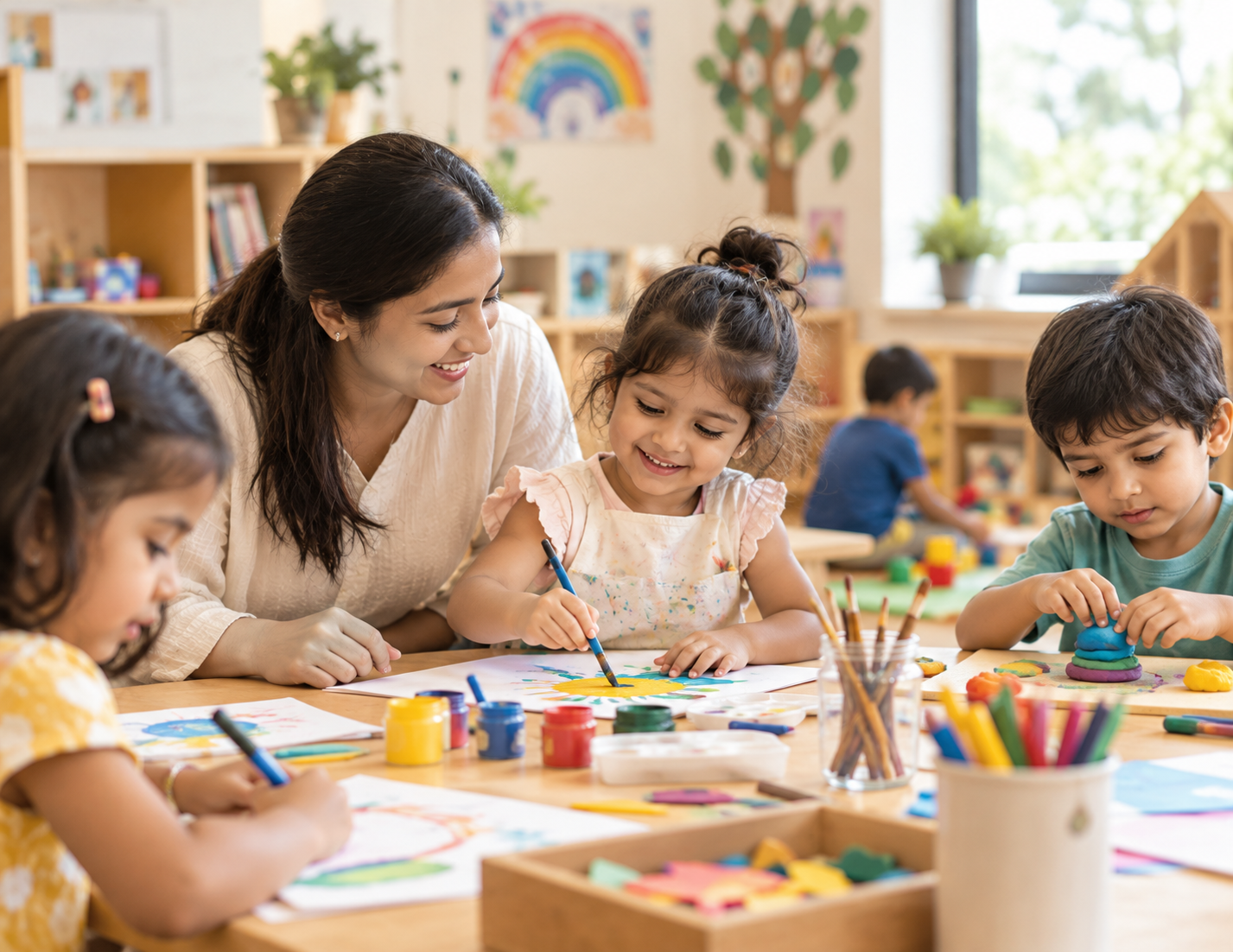
The Role of Creative Arts in Early Childhood Development
Why Creative Arts Matter in Early Childhood
In the early years of childhood, creativity plays a vital role in how children learn and express themselves. Activities such as drawing, painting, music, and movement are not just forms of entertainment—they are essential tools for development.
In daycare environments, creative arts are thoughtfully integrated into daily routines to encourage self-expression, imagination, and emotional growth. These activities allow children to explore their ideas freely while developing important cognitive and motor skills.
Creative expression provides children with a voice, even before they are able to fully communicate through words.
This is why a daycare with activities like art, music, and movement is a strong part of quality early childhood education. At Banyan, creative arts are woven into everyday play and learning, so children can explore, imagine, and express themselves naturally.
What Are Creative Arts in Early Childhood?
Creative arts are hands-on ways for children to explore ideas and feelings. They usually include:
- Drawing and painting
- Craft activities such as cutting, pasting, and collage
- Clay and dough play
- Music and singing
- Dance and movement
- Role play and storytelling
The focus is on the experience, not the final result. This is a core idea in a play based preschool and in experiential learning preschool programs, where children learn by doing.
Encouraging Self-Expression
One of the most important aspects of creative arts is that it allows children to express their thoughts and emotions in their own unique way.
Through drawing or painting, children can share how they see the world. Through music and movement, they can express feelings that they may not yet have the words to describe.
Daycare teachers often encourage open-ended art activities where there is no “right” or “wrong” outcome. This freedom helps children feel confident in expressing themselves without fear of judgment.
Over time, children begin to develop a sense of identity and individuality through their creative work.
Supporting Cognitive Development
Creative activities also play a significant role in cognitive development. When children engage in art, they are making decisions about colors, shapes, and patterns.
These choices help develop problem-solving skills and critical thinking. For example, deciding how to mix colors or how to create a particular shape requires planning and experimentation.
Music activities, such as singing songs or playing simple instruments, also support memory and pattern recognition.
These experiences help strengthen the brain in ways that are both engaging and enjoyable. This is an important part of cognitive development in preschool, because children learn best when they are curious and engaged.
Developing Fine and Gross Motor Skills
Art and creative play contribute to both fine and gross motor development. Activities such as drawing, coloring, cutting, and molding clay help strengthen hand muscles and improve coordination.
Similarly, activities like dancing or movement-based games support gross motor skills by encouraging balance, coordination, and body awareness.
These physical skills are important for everyday tasks and overall development.
Building Confidence and Emotional Well-Being
Creative arts also have a strong impact on a child’s emotional well-being. When children create something on their own, they experience a sense of accomplishment.
Displaying their artwork or appreciating their efforts helps boost their confidence and self-esteem.
Creative activities can also be calming and therapeutic. They provide children with a safe space to relax, focus, and process their emotions.
This supports emotional development in preschool and is also a gentle answer to how to build confidence in children: let them try, explore, and take pride in their own work.
Encouraging Collaboration and Social Interaction
Many creative activities in daycare are done in groups, which encourages collaboration and teamwork.
Children may work together on art projects, participate in group songs, or engage in role-play activities. These experiences help them learn to share ideas, respect others’ perspectives, and work as a team.
Such interactions strengthen social skills while making learning more enjoyable. Group art, music, and pretend play are some of the best ways of building social skills in preschool.
What Each Creative Activity Teaches
| Creative activity | What children build |
|---|---|
| Drawing and painting | Self-expression, color and shape awareness, fine motor skills |
| Clay and dough play | Hand strength, coordination, imagination |
| Cutting and pasting | Focus, hand-eye coordination, planning |
| Singing and music | Memory, rhythm, language, pattern recognition |
| Dance and movement | Balance, body awareness, gross motor skills |
| Role play and storytelling | Communication, empathy, creativity |
| Group art projects | Teamwork, sharing, social skills |
Creative Arts Activities by Age
Children enjoy creativity differently as they grow. Here are some ideas for activities for preschool children and for younger ones too:
- Infants and toddlers (6 months to 2 years): sensory play, finger painting with safe materials, simple songs, and movement. These are great preschool activities for toddlers, always with an adult close by.
- Ages 2 to 3: big crayons, simple painting, dough play, and action songs
- Ages 3 to 4: cutting and pasting, simple crafts, rhymes, and pretend play
- Ages 4 to 6: more detailed drawing, story-based art, group projects, and dance or drama
Easy Learning Activities for Toddlers at Home
You do not need special materials to keep children’s creativity growing at home. Simple learning activities for toddlers include:
- Finger painting or painting with sponges (with supervision)
- Playdough shapes and animals
- Collage with paper scraps, leaves, or fabric
- Dance parties with simple songs
- Homemade instruments such as a pot and a wooden spoon
- Drawing stories, where your child draws and tells you what is happening
How Parents Can Encourage Creativity
- Praise effort and ideas, not only the final picture
- Ask open questions: “Tell me about your drawing”
- Display their artwork proudly
- Avoid correcting or “fixing” their art
- Let them get messy and explore freely
What to Look for in a Daycare with Creative Activities
When choosing a daycare or preschool, look for:
- Open-ended activities where there is no right or wrong
- A mix of art, music, movement, and storytelling during the week
- Educators who encourage and ask questions instead of giving instructions
- Child-friendly, safe materials and clean, organised spaces
- Children’s artwork on display, showing that effort is valued
- Happy, engaged children who feel free to explore
Creative arts are an essential part of early childhood development. They support not only imagination and self-expression but also cognitive, physical, and emotional growth.
In daycare environments, these activities create a joyful and engaging space where children can explore, create, and learn at their own pace.
Through colors, music, and movement, children discover new ways to express themselves—and in doing so, they build skills that will stay with them for a lifetime.
Related reading
- The Hidden Learning That Happens During Play
- School Ready vs Emotionally Ready: The Conversation Every Parent Is Having
Frequently Asked Questions
1. Why are creative arts important in early childhood?
Creative arts help children express feelings, build thinking and motor skills, grow in confidence, and learn to work with others. They give children a voice before they can fully explain things in words.
2. How do creative arts support cognitive development?
Choosing colors, planning shapes, and solving small problems in art build critical thinking. Music supports memory and pattern recognition.
3. What are good creative activities for toddlers?
Finger painting, playdough, simple songs, dancing, and sensory play all work well. Keep activities short, safe, and supervised.
4. What are good activities for preschool children?
Drawing, painting, cutting and pasting, clay, music, dance, role play, and storytelling are all great choices for preschoolers.
5. How does art help with motor skills?
Drawing, coloring, cutting, and clay strengthen hand muscles and coordination, while dancing and movement games build balance and body awareness.
6. How do creative arts help a child’s emotional well-being?
Creating something gives children a sense of achievement, while calm activities help them relax and process feelings. This supports emotional development in preschool.
7. How does daycare help child development through creativity?
A daycare with activities such as art, music, and role play gives children daily chances to express themselves, explore ideas, and practise social skills with others.
8. Should I correct my child’s drawing?
No. Open-ended art has no right or wrong. Encourage effort and ask about the picture instead, so your child feels confident expressing themselves.
9. How can I encourage creativity at home?
Offer simple materials like crayons, paper, and playdough, let your child lead, ask open questions, and display their work.
10. What should I look for in a daycare for creative learning?
Look for open-ended activities, a mix of art, music, and movement, encouraging educators, safe materials, and happy, engaged children.
 Call Us
 Email Us