 +91-9810222486
 contact@thebanyanworld.com
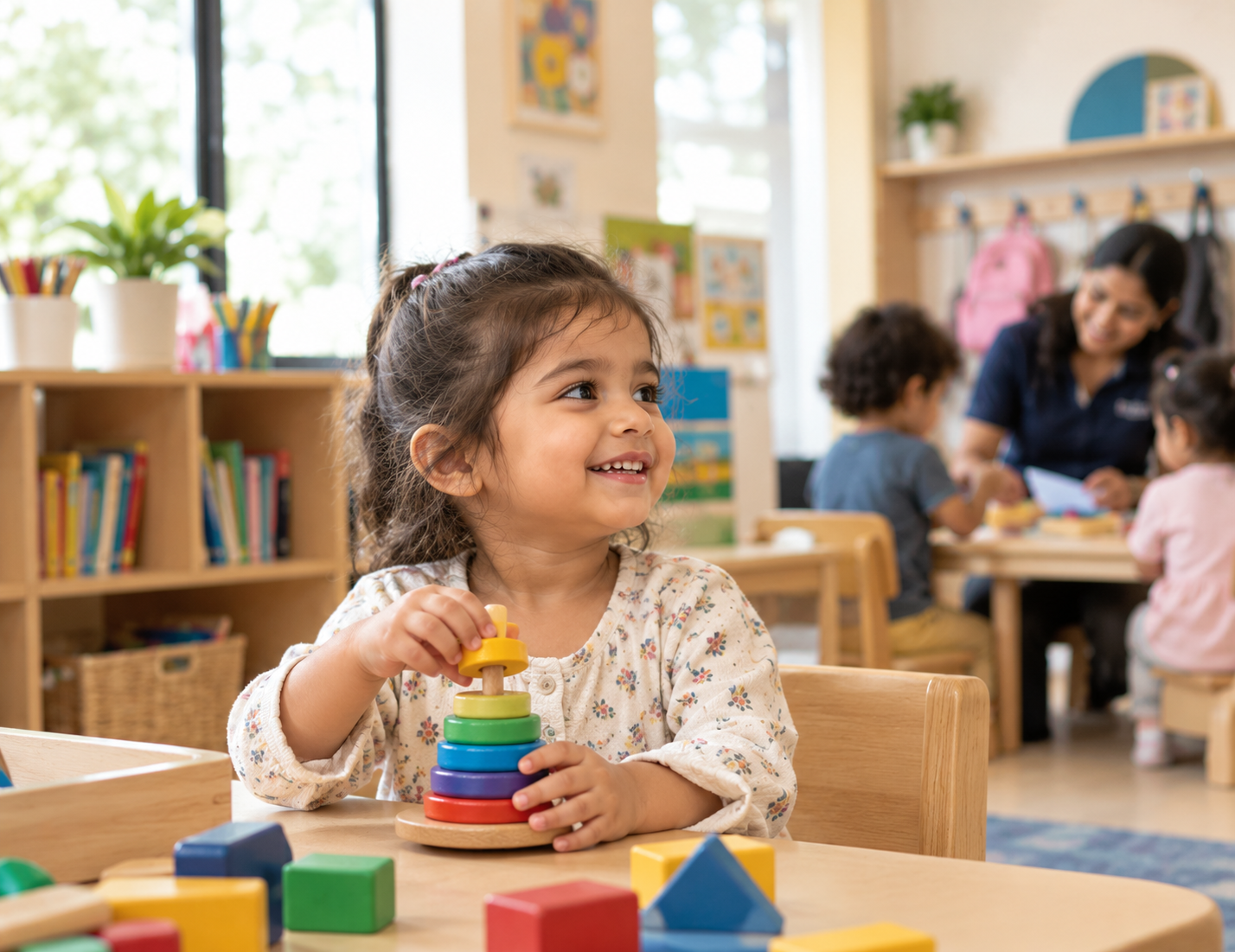
The Importance of Routine: Why Structure Helps Young Children Thrive
Why Routine Matters in Early Childhood
In the early years of childhood, consistency and predictability play a crucial role in a child’s development. While play and exploration are essential, having a structured routine provides children with a sense of security and stability.
In daycare environments, routines are thoughtfully designed to balance learning, play, rest, and social interaction. These daily patterns may seem simple, but they have a profound impact on how children feel, behave, and learn.
A well-structured routine helps children understand what to expect, making their day more comfortable and enjoyable.
A good daycare routine for toddlers is one of the quiet foundations of early childhood education. At Banyan, our daily rhythm is built around care, play, and learning, so children always know what comes next and feel safe in it.
What Is a Daycare Routine?
A daycare routine is the predictable flow of the day. It usually includes:
- Arrival and greeting
- Circle time or group time
- Meals and snacks
- Free play and guided activities
- Art, music, and storytelling
- Outdoor play and movement
- Rest or nap time
- Quiet activities and pick-up
Every child is different, and younger children need more flexibility, so a good routine is steady but not rigid.
Creating a Sense of Security and Comfort
For young children, the world can often feel new and unpredictable. A consistent routine helps reduce this uncertainty by creating a familiar environment.
When children know what comes next—whether it is circle time, snack time, or playtime—they feel more secure. This sense of predictability allows them to relax and engage more confidently in activities.
In daycare settings, simple routines like greeting rituals, scheduled activities, and consistent transitions help children feel safe and supported throughout the day.
Encouraging Independence and Responsibility
Routines also play an important role in helping children develop independence. When children follow a daily schedule, they begin to understand how to manage simple tasks on their own.
For example, cleaning up after playtime, washing hands before meals, or organizing their belongings teaches responsibility. Over time, children start performing these tasks with minimal guidance.
These small achievements build confidence and encourage children to take initiative in their daily activities.
Supporting Emotional Regulation
Transitions can sometimes be challenging for young children. Moving from one activity to another may lead to frustration or resistance if not handled smoothly.
A consistent routine helps children prepare for these transitions. When they know that one activity will follow another, they are more likely to adapt calmly.
Teachers often use cues such as songs, visual schedules, or gentle reminders to guide children through transitions. This helps children manage their emotions and develop patience.
This is an important part of emotional development in preschool: a predictable day gives children the calm they need to learn how to handle big feelings.
Enhancing Learning and Focus
A structured routine also supports better learning. When children follow a predictable schedule, they can focus more on the activity at hand rather than worrying about what comes next.
Regular routines create a balanced environment where children have dedicated time for learning, play, rest, and interaction. This balance improves attention span and overall engagement.
Children are more likely to participate actively when they feel comfortable and familiar with their daily schedule.
Building Healthy Habits
Daily routines help children develop habits that contribute to their overall well-being. Scheduled meal times, rest periods, and playtime create a balanced lifestyle.
These habits not only support physical health but also teach children the importance of discipline and time management from an early age.
Over time, these patterns become a natural part of a child’s lifestyle, supporting their growth beyond daycare.
Good daycare hygiene routines, such as washing hands before meals and after play, are part of these habits. They keep children healthy and safe.
Routine by Age: What Changes as Children Grow
- Infants (6 months to 1 year): a flexible rhythm that follows each baby’s feeding, sleep, and play needs, with plenty of cuddles and one-to-one attention
- Toddlers (1 to 2 years): short, repeated activities, regular meals and naps, and lots of movement
- Ages 2 to 3: simple group routines, circle time, and growing independence in small tasks
- Ages 3 to 4: longer activities, more structured learning play, and group games
- Ages 4 to 6: a fuller schedule with learning time, creative activities, and preparation for formal school
Routine and Settling In: Helping Children Adjust to Daycare
A predictable routine is one of the best ways to help a child adjust to daycare. Some tears at the start are normal, and daycare separation anxiety usually eases once a child knows what to expect each day. These first day of daycare tips can help:
- Visit together first so the space feels familiar
- Keep goodbyes short, warm, and consistent
- Share your child’s home routine with the educators
- Match home and daycare rhythms where possible, especially for sleep and meals
- Be patient. Most children settle within a few weeks.
How Parents Can Support Routine at Home
If you are wondering how to prepare your child for daycare, a steady routine at home makes a big difference:
- Keep wake-up, meal, and bedtime at similar times each day
- Use simple cues, such as a song for tidy-up time
- Give a heads-up before changes: “Five more minutes, then we clean up”
- Create a calm morning routine to avoid rushing
- Stay consistent, even on weekends, as far as possible
What to Pack for Daycare
Being ready for the day helps the routine run smoothly. Many parents pack:
- A spare set of clothes
- A water bottle
- Any required diapers or wipes
- A small comfort item, if the daycare allows it
- Any meals or snacks, depending on the centre’s policy
Always check your centre’s guidelines on what to bring, and what a daycare provides.
What to Look for in a Daycare Routine
When choosing a daycare, ask about:
- Daycare timings and how flexible they are
- A balanced day of play, learning, meals, rest, and outdoor time
- Smooth transitions, with songs, cues, or visual schedules
- Flexibility for younger children and their individual needs
- How the daycare keeps parents updated about the day
- A safe, clean, and calm environment
Routine may seem like a simple concept, but it plays a powerful role in shaping a child’s development. In daycare environments, structured routines create a sense of security, encourage independence, and support emotional well-being.
By providing a predictable and nurturing environment, routines help children feel confident, comfortable, and ready to explore the world around them.
In many ways, it is within these small, consistent moments of everyday life that children learn some of their most important lessons.
Related reading
- Building Confidence in Early Years: Small Steps, Big Growth
- Not Every Cry Is a Tantrum: Understanding Children Beyond Behavior
Frequently Asked Questions
1. Why is routine important for young children?
Routine helps children feel safe, understand what to expect, manage transitions calmly, and build independence and healthy habits.
2. What is a good daycare routine for toddlers?
A good routine includes a warm arrival, group time, snacks and meals, play, activities, outdoor time, and rest, with flexibility for each child’s needs.
3. How does routine help with emotional regulation?
When children know what comes next, they handle transitions more calmly. Cues like songs or visual schedules help them prepare and manage frustration.
4. How does routine help children adjust to daycare?
A predictable day helps children feel secure, which eases separation anxiety. Most children settle within a few weeks once the routine feels familiar.
5. What should a full day daycare include?
A good full day daycare combines meals, rest, play, learning activities, and outdoor time, in a safe and caring environment.
6. How can I prepare my child for daycare?
Visit the centre together, keep a steady routine at home, practise short separations, and talk positively about daycare. Keep goodbyes short and warm.
7. What are good first day of daycare tips?
Arrive on time, say goodbye warmly and briefly, send a familiar comfort item if allowed, and share your child’s routines with the educators.
8. What should I pack for daycare?
Usually a spare set of clothes, a water bottle, diapers or wipes if needed, and a comfort item. Always check the centre’s guidelines first.
9. Should a daycare routine be strict?
No. It should be steady but flexible, especially for infants and toddlers, whose feeding and sleep needs vary.
10. What daycare timings should I look for as a working parent?
Look for hours that match your work schedule and commute, and ask how the daycare handles late pick-ups or schedule changes.
 Call Us
 Email Us