 +91-9810222486
 contact@thebanyanworld.com
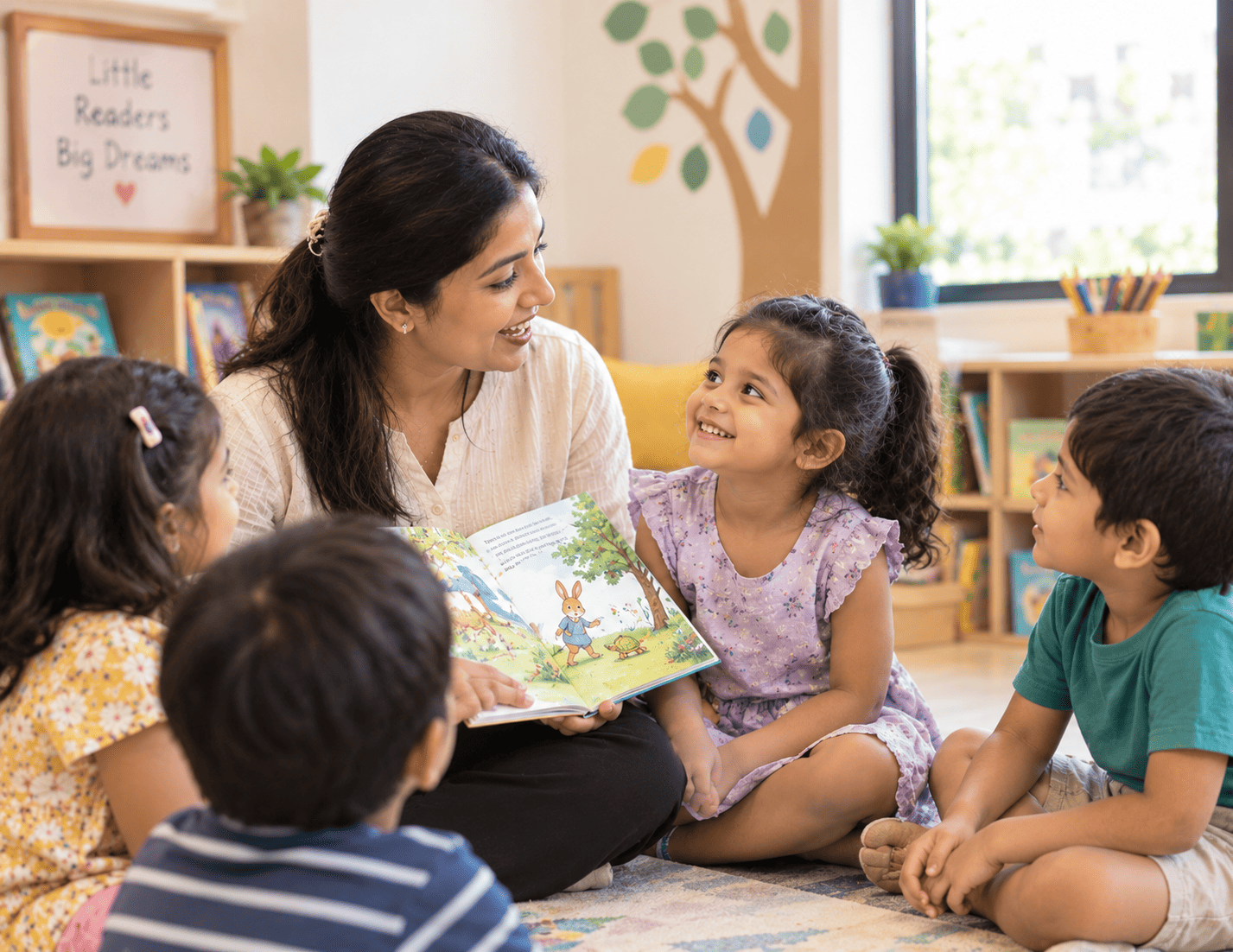
The Power of Storytelling: Shaping Young Minds Through Stories
Why Storytelling Matters in Early Childhood
Stories have always been a meaningful part of childhood. From bedtime tales to classroom story sessions, storytelling plays a powerful role in shaping how children think, imagine, and understand the world around them.
In daycare environments, storytelling goes beyond entertainment. It becomes a valuable learning tool that supports language development, emotional growth, and creativity. Through stories, children are introduced to new ideas, characters, and experiences in a way that feels engaging and relatable.
At early learning centers, storytime is often one of the most anticipated parts of the day—a moment where imagination takes the lead.
Storytelling is a key part of early childhood learning, and it fits naturally into a play based preschool, where children learn through listening, imagining, and joining in. At Banyan, storytime is part of everyday learning, giving children a calm, joyful way to explore new ideas.
What Is Storytelling in Early Childhood?
Storytelling is more than reading from a book. In daycare and preschool, it can include:
- Read-aloud sessions with picture books
- Oral storytelling, where the teacher tells a story without a book
- Puppet and felt-board stories
- Role play and acting out stories
- Rhymes, songs, and action stories
- Children telling their own stories
Building Language and Communication Skills
One of the most important benefits of storytelling is its impact on language development. As children listen to stories, they are exposed to new words, sentence structures, and ways of expression.
Teachers often use voice modulation, gestures, and visual aids to make stories more interactive. This not only keeps children engaged but also helps them understand how language works in different contexts.
Over time, children begin to use new vocabulary in their own conversations. They learn how to express thoughts, describe situations, and communicate more effectively with others.
Encouraging Imagination and Creativity
Stories open the door to imagination. When children listen to a story, they create images in their minds, imagining characters, settings, and events.
This imaginative thinking plays a crucial role in creativity. Children begin to think beyond what they see and explore ideas freely.
Storytelling sessions often inspire children to create their own stories, drawings, or role-play activities. These creative expressions help them build confidence and develop original thinking skills.
How Storytelling Supports Thinking and Memory
Stories also support cognitive development in preschool. When children follow a story, they practise:
- Listening and focus, by following the plot from start to finish
- Memory, by remembering characters and events
- Sequencing, by understanding what happens first, next, and last
- Prediction, by guessing what may happen next
- Problem-solving, by thinking about how a character could solve a problem
Supporting Emotional Understanding
Stories also help children understand emotions and relationships. Through characters and situations, children learn about feelings such as happiness, fear, kindness, and empathy.
For example, a story about friendship may teach children the importance of sharing and helping others. A story about overcoming challenges can help them understand resilience and courage.
Teachers often use storytelling as a way to gently introduce important life lessons in a way that children can easily relate to.
This is a gentle way to support emotional development in preschool, because children can talk about big feelings through a character before they are ready to talk about their own.
Story Themes and What They Teach
| Story theme | What children learn |
|---|---|
| Friendship | Sharing, kindness, and including others |
| Feeling scared or nervous | That fear is normal, and that help is available |
| Trying again after failing | Resilience, courage, and perseverance |
| Starting something new | Dealing with change and new places |
| Helping others | Empathy and caring |
| Family and community | Belonging and respect |
Creating Meaningful Social Connections
Storytime is often a shared experience in daycare settings. Sitting together, listening, and reacting to a story creates a sense of connection among children.
Group discussions after storytelling encourage children to share their thoughts and listen to others. These interactions help build communication skills and strengthen social bonds.
Storytelling also creates a calm and comforting environment where children feel safe and engaged.
These shared moments also build social skills in preschool, such as taking turns to speak, listening to others, and respecting different ideas.
Storytelling Through the Early Years
Children enjoy stories differently as they grow:
- Infants and toddlers (6 months to 2 years): simple picture books, rhymes, songs, and soft, expressive voices
- Ages 2 to 3: short stories with repetition, animal sounds, and action rhymes
- Ages 3 to 4: longer stories, simple questions, puppets, and acting out
- Ages 4 to 6: more detailed stories, predicting what happens next, and creating their own stories
Simple Storytelling Activities for Preschool Children
Here are some easy activities for preschool children, at daycare or home:
- Picture walks: look at the pictures first and guess what the story is about
- Act it out: let children play the characters
- Story stones or cards: pick random pictures and make a story together
- Puppet shows with simple homemade puppets
- Draw the story: children draw their favourite part and describe it
- “What happens next?” pause and let children guess
- Retell it: children tell the story back in their own words
These storytelling games also work as learning activities for toddlers, as long as they are short, simple, and filled with expression.
How Parents Can Make Storytime Special at Home
- Set aside a regular time, such as before bed
- Read with expression, using different voices and sounds
- Let your child choose the book, even if it is the same one again
- Ask open questions: “How do you think she felt?”
- Talk about the story afterwards and connect it to real life
- Tell your own stories about your childhood or family
Reading the same story again and again is perfectly normal. Repetition helps children learn new words and feel secure.
What to Look for in a Daycare with Storytelling
When choosing a daycare or early learning centre, look for:
- A regular storytime in the daily routine
- Interactive storytelling, with voices, gestures, and questions
- A good mix of books and stories for different ages
- Daycare with activities that connect to stories, such as art, role play, and music
- Educators who listen to children’s ideas and answers
- A calm, safe space where children enjoy sitting together
This is also how daycare helps child development: through shared routines, trusted relationships, and joyful learning every day.
Storytelling is much more than a simple activity—it is a powerful tool that supports a child’s overall development. Through stories, children learn to communicate, imagine, and understand the world around them.
In daycare environments, these storytelling moments become meaningful experiences that nurture creativity, empathy, and connection.
And sometimes, it is through the simplest stories that children discover the most important lessons.
Related reading
- The Role of Creative Arts in Early Childhood Development
- The Hidden Learning That Happens During Play
Frequently Asked Questions
1. Why is storytelling important in early childhood?
Storytelling builds language, imagination, listening, and emotional understanding. It also helps children feel connected and calm.
2. How does storytelling help language development?
Children hear new words, sentence patterns, and ways of expressing ideas. Over time, they begin to use new vocabulary in their own conversations.
3. How does storytelling support emotional development in preschool?
Stories let children explore feelings like fear, kindness, and courage through characters. This helps them name their own emotions and understand others.
4. What are good storytelling activities for preschool children?
Picture walks, acting out stories, puppets, drawing the story, and “What happens next?” games all work well.
5. Are storytelling activities suitable for toddlers?
Yes. Toddlers enjoy short picture books, rhymes, songs, and expressive voices. Keep stories short and interactive.
6. How does storytelling help social skills?
Group storytime teaches children to listen, take turns, share ideas, and respect others’ views. These shared moments build a sense of belonging.
7. How often should I read to my child?
Daily, if possible, even for a few minutes. A regular storytime, such as before bedtime, helps children build language and a love of books.
8. Why does my child want the same story again and again?
Repetition helps children learn new words, understand the plot, and feel secure. It is a normal and healthy part of learning.
9. How does daycare help child development through stories?
A daycare with storytime and related activities gives children regular practice in listening, speaking, and imagining, along with social time with other children.
10. What should I look for in a daycare for storytelling?
Look for a regular storytime, interactive and expressive storytelling, a mix of books, and educators who listen to children’s ideas.
 Call Us
 Email Us