 +91-9810222486
 contact@thebanyanworld.com
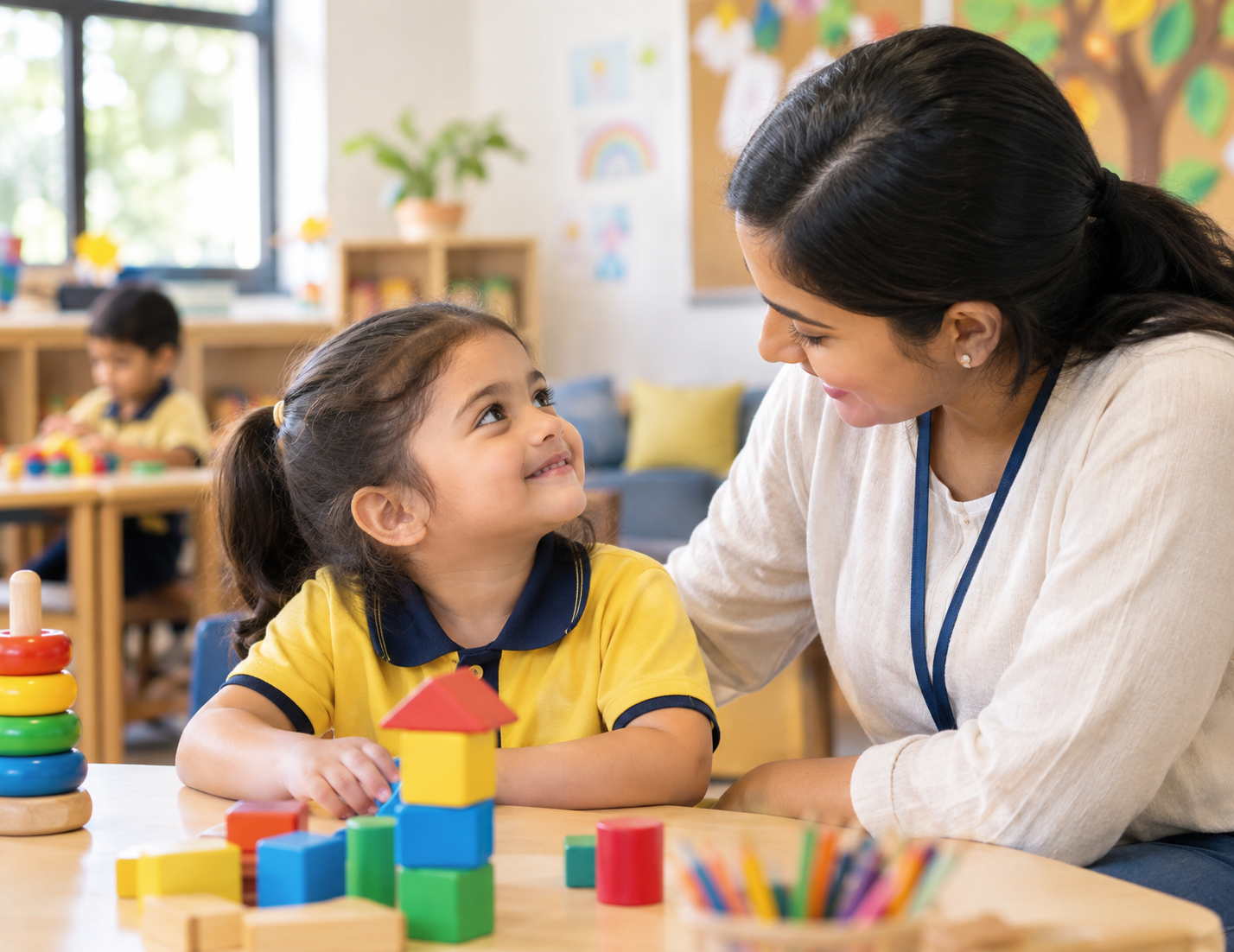
Wearing a Uniform Doesn't Mean a Child Is Ready
One of the biggest parenting conversations today revolves around school readiness.
Parents often prepare children for preschool by teaching alphabets, numbers, colors, and routines.
But emotional readiness is equally important.
A child may know how to hold a pencil.
But are they comfortable being away from home?
Do they feel emotionally secure?
Can they express discomfort or ask for help?
These emotional skills shape how children adapt to new environments.
What Does Emotional Readiness Really Mean?
Emotional readiness is a child's ability to feel safe, express feelings, and cope with new people and routines. It is a big part of emotional development in preschool, and it often decides how smoothly a child settles in.
Emotionally ready children can usually:
- Say when they are upset, hungry, tired, or need help
- Feel comfortable with adults other than their parents
- Follow simple routines with gentle guidance
- Recover from small disappointments with support
- Show curiosity about new people and places
At Banyan, we believe readiness goes beyond academics.
Why Emotional Readiness Matters in Early Childhood Education
Emotionally ready children are more likely to:
- Build trust with educators
- Participate confidently
- Handle transitions better
- Feel comfortable socially
- Enjoy learning experiences
Many parents today are shifting focus from "performance" to emotional comfort. This is part of a bigger change in what modern parents look for in a good preschool.
Because a child who feels anxious, overwhelmed, or emotionally disconnected may struggle even if they are academically capable.
Strong early childhood education recognises this. It builds social skills in preschool alongside early literacy and numeracy, because children learn best when they feel secure.
Both matter. But without emotional readiness, academic skills often do not show up in the classroom.
Signs Your Child May Be Ready for Preschool
Every child is different, and there is no perfect age. Look for gentle signs such as:
- Curiosity about other children and new places
- Willingness to spend short periods with other caring adults
- Some ability to show what they need, in words or gestures
- Basic comfort with routines like meals, naps, and play
If your child is not quite there yet, that is completely normal. A supportive play school environment can help children grow into these skills at their own pace.
Which Program Suits Which Stage?
Choosing a preschool admission point depends on the child's comfort more than their age alone. At Banyan, programs are designed around each stage of early development:
- Playnest (6 months to 2 years): early exploration with the guidance of parents and facilitators, a gentle start for the youngest learners
- Cuddle Bugs, Play Group (2 to 3 years): often a child's first experience away from home, designed to ease them into a new social environment. A good option if you are looking at a preschool for a 2 year old.
- Caterpillars, Nursery (3 to 4 years): cross-curricular activities and a gradual introduction to organized learning. A natural fit if you are searching for a preschool for a 3 year old.
If you are a working parent balancing hybrid or shift-based schedules, you may also want to read why parents are choosing flexible daycare more than ever.
This Is Why Preschool Transitions Should Happen Gently
This is why preschool transitions should happen gently.
Small things help:
- Familiar routines
- Patient communication
- Emotional reassurance
- Positive separation experiences
- Encouraging independence slowly
How to Prepare Your Child for Preschool: A Simple Parent Guide
If you are wondering how to prepare your child for preschool, these steps make the first weeks much easier:
- Visit the centre together. Let your child see the classroom, meet the educators, and explore the play area before day one.
- Practice short separations. Spend a little time with grandparents or trusted family so being away from you feels familiar.
- Build a simple routine. Consistent sleep, meal, and play times at home make school routines easier to follow.
- Talk about school positively. Read picture books about school and describe what a day will look like.
- Encourage small acts of independence. Let your child try washing hands, packing a small bag, or choosing a snack.
- Name feelings. Words like "happy," "sad," "worried," and "excited" help children express what they feel.
- Say goodbye warmly and briefly. A calm, confident goodbye works better than a long one.
First Day of Preschool: What to Expect
Some tears on the first day, or in the first few weeks, are normal. Separation anxiety is a healthy sign of attachment, not a sign that something is wrong. A few first day of daycare tips also work well for preschool:
- Arrive on time and keep the goodbye short and cheerful
- Send a familiar comfort item if the centre allows it
- Share your child's routines, likes, and worries with the educators
- Ask for updates, and trust the process
- Stay patient. Most children settle in within a few weeks with steady reassurance.
How Parents Can Build Confidence at Home
Confidence grows through everyday moments. To help your child feel capable and secure:
- Praise effort, not only results
- Give simple choices, such as which shirt to wear
- Let them solve small problems before stepping in
- Listen without rushing or dismissing feelings
- Celebrate small steps, like making a new friend
The early years shape how children eventually feel about learning itself.
When children associate school with safety, warmth, and encouragement, curiosity grows naturally.
And that emotional connection stays with them for years.
A uniform and a school bag do not make a child ready. Feeling safe, understood, and encouraged does. At Banyan, we focus on this emotional foundation from the very first day, because children who feel secure are the ones who explore, learn, and flourish.
Related reading
The New Definition of "Good Schools" According to Modern Parents
Why Parents Are Choosing Flexible Daycare More Than Ever
Frequently Asked Questions
1. What is school readiness?
School readiness is a child's overall preparedness for learning, including emotional, social, language, and physical skills. It is not only about knowing alphabets and numbers.
2. What is emotional readiness for preschool?
Emotional readiness means a child feels safe away from home, can express needs, and can cope with new people and routines with adult support. It is a key part of emotional development in preschool.
3. How do I know if my child is ready for preschool?
Look for curiosity about other children, comfort with other caring adults, and basic comfort with routines. Every child is different, so readiness is about comfort more than age.
4. How can I prepare my child for preschool?
Visit the centre together, practice short separations, build a steady routine, talk about school positively, and say goodbye warmly and briefly. Naming feelings also helps children express themselves.
5. What is the right age to start preschool?
Many children begin between 2 and 4 years, depending on comfort and readiness. Programs for 2, 3, and 4 year olds are usually designed differently to match each stage of development.
6. How do I handle my child crying on the first day of preschool?
Stay calm, keep the goodbye short and warm, and trust the educators to comfort your child. Crying is common and usually eases within a few weeks with consistent routines.
7. What is separation anxiety in children?
Separation anxiety is a child's distress when apart from a parent. It is a normal part of development and improves with gentle, positive separation experiences.
8. How does preschool help with social skills?
Preschool gives daily practice in sharing, taking turns, communicating, and playing with others. Supportive educators guide children through these moments so they grow in confidence.
9. How can I build my child's confidence at home?
Praise effort, offer simple choices, let them try small tasks independently, and listen to their feelings. Confidence grows through many small, positive experiences.
10. What programs does Banyan offer for young children?
Banyan offers Playnest (6 months to 2 years), Cuddle Bugs Play Group (2 to 3 years), Caterpillars Nursery (3 to 4 years), Butterflies LKG (4 to 5 years), and Busy Bees UKG. Each is built around play based learning and emotional well-being.
 Call Us
 Email Us